
Read the receipt: what a Polestar 3 costs the climate, and the promise that moved
By Ayodele – Section 4, Piece 2
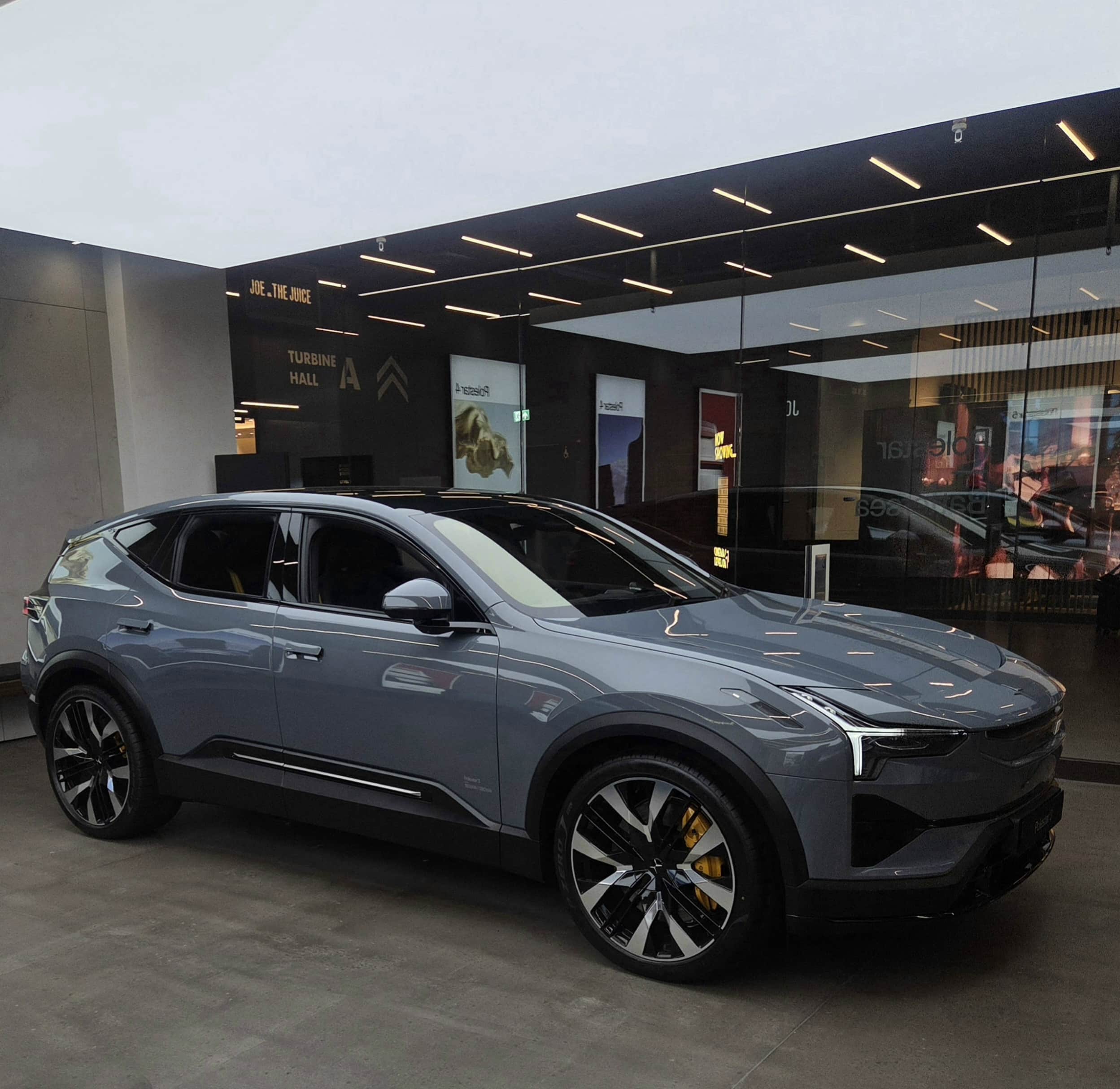
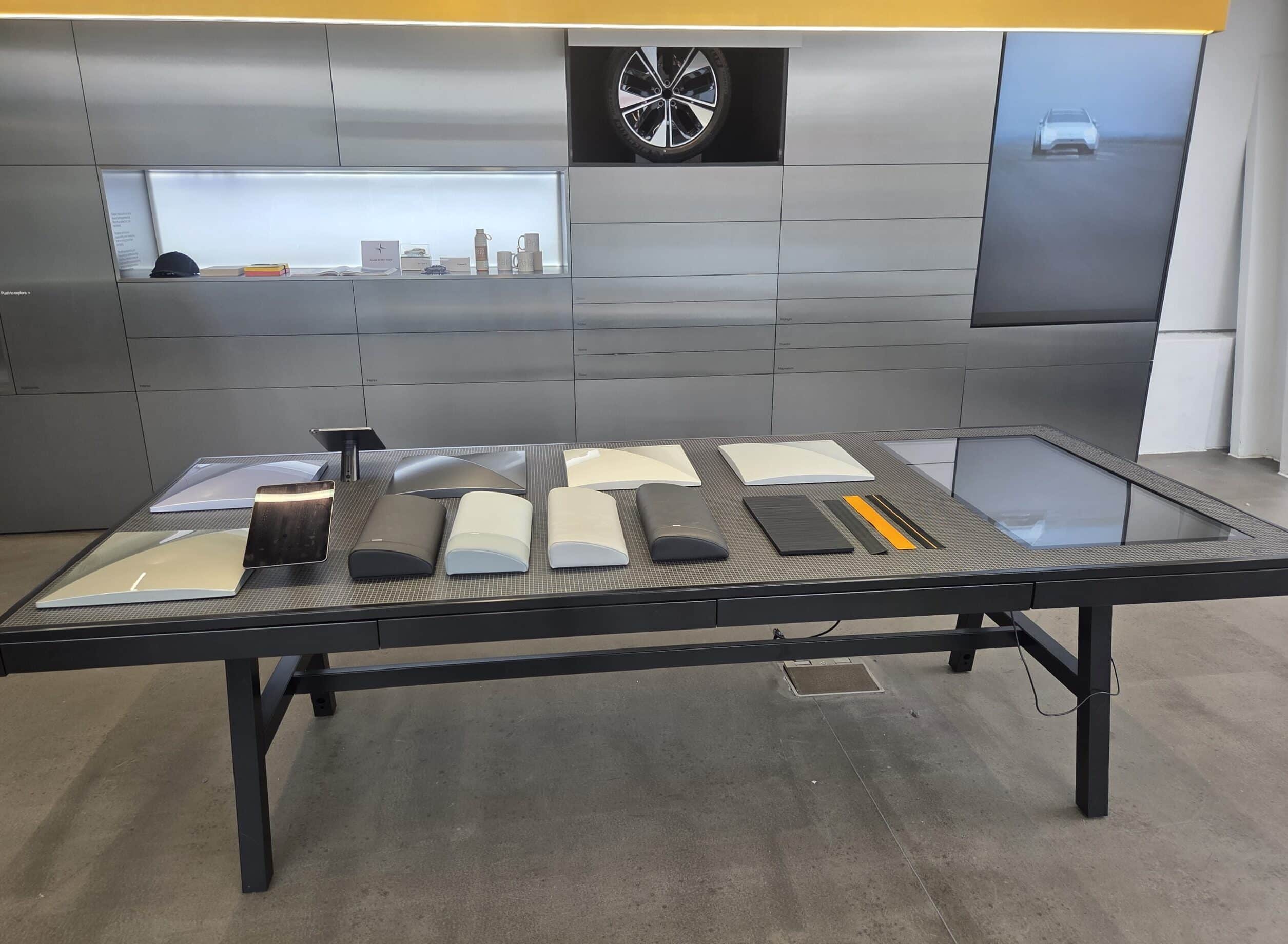
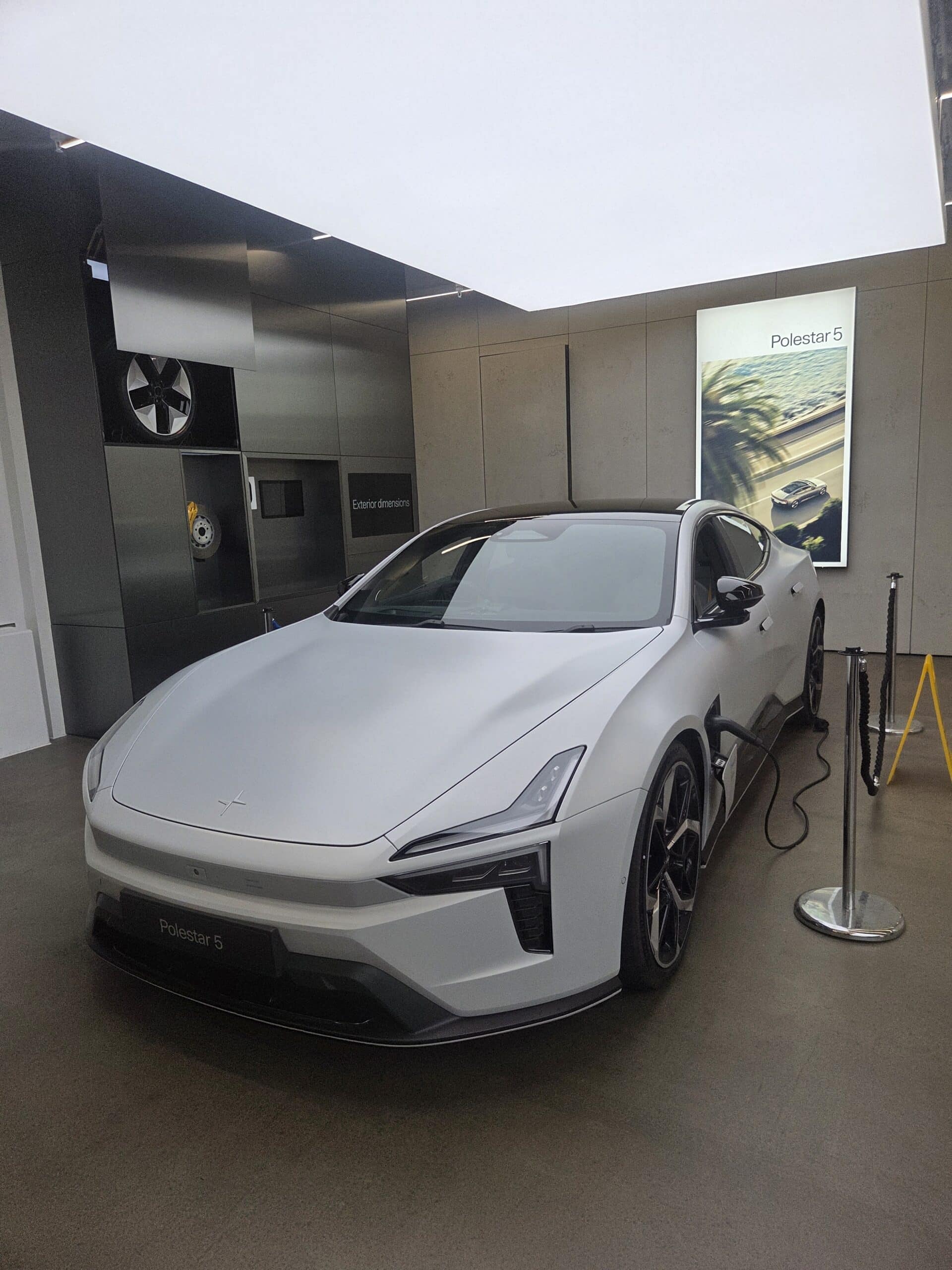
In October I sat in a Polestar 3 at the Battersea showroom. The first thing you notice is the craft: the gold Brembo calipers, the swatches of paint and fabric laid out on a long table. The staff member I spoke to said the question customers ask most is how far the car goes on a full charge. Polestar’s official answer for the Polestar 3 Performance is a WLTP range target of 373 miles, measured in lab conditions; real-world range varies.
Range is a fair first question. But Polestar has built its name on a second one: what does the car cost the climate? It publishes an answer, and it has changed one of its promises. Both deserve to be read together.
The promise that moved.
In April 2021, Polestar described itself as “challenging ourselves to create a climate-neutral car by 2030.” That page was still online when I checked on 21 October 2026. Its Sustainability report 2025, published in April 2026, says on page 33 that the 2030 target will not be reached. The new target is a climate-neutral car by 2035. The report gives its reasons: macroeconomic and political factors, changes in platform strategy, and uneven engagement across the industry. I think a moved target is easier to trust than a quiet one. If you have seen the 2021 promise, you should also know it changed, and why.
What the receipt says.
Polestar publishes a carbon footprint summary for the Polestar 3. It covers the whole life of the car, “cradle to grave”, over an assumed 200,000 km and 15 years. The biggest variable is the electricity you charge with.
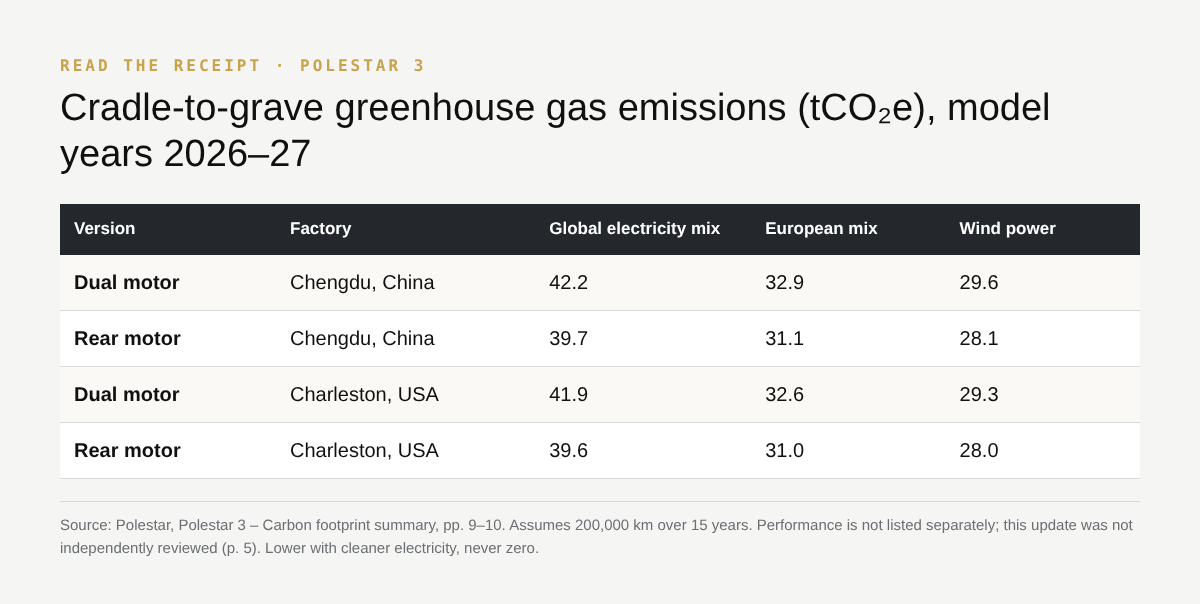
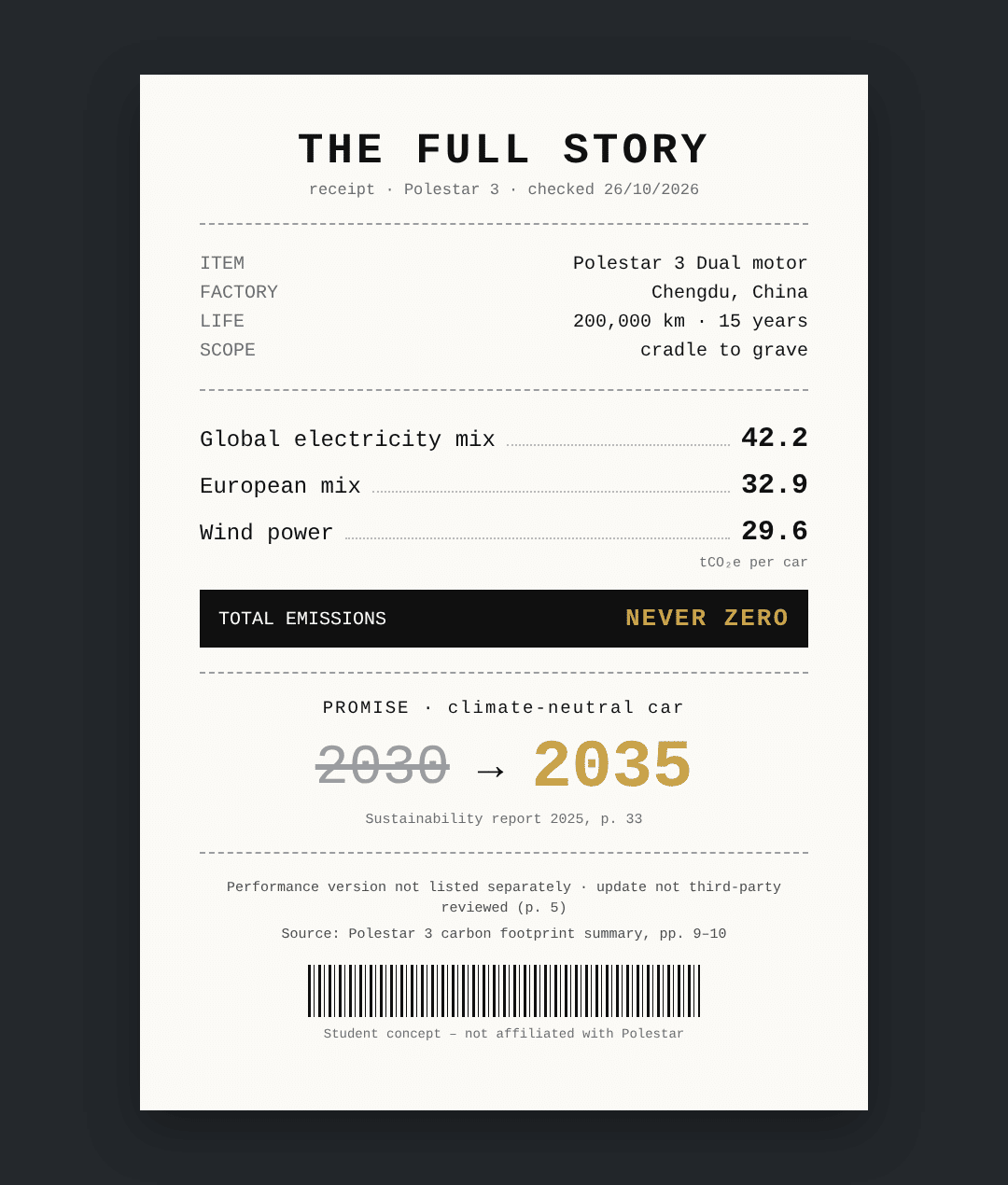
Three things are worth knowing before you use these numbers. Performance is not listed separately; the summary covers Rear motor and Dual motor only. The update is not independently reviewed: the original Polestar 3 assessment was reviewed by a third party, and this update follows the same method but was not reviewed again (p. 5). I could not find which factory supplies UK cars, so I show both. Across the company, the report says emissions per sold car have fallen 30.9% since 2020 (p. 6). Its longer goal is net zero by 2040, which relies partly on carbon removals for what remains (p. 32).
What the receipt does not say.
An electric car is not a zero-emission product. Its battery, materials and electricity all carry emissions, which is why UK advertising guidance asks brands not to suggest that a vehicle produces no emissions at all. The figures above are the honest version: lower with cleaner electricity, never zero.
Why this matters (UN SDG 12.8).
UN Sustainable Development Goal target 12.8 aims to ensure people everywhere have “the relevant information and awareness for sustainable development”. A brand blog is a small contribution. The UN measures this target through education policy, not car marketing. But a buyer who can see the footprint, the electricity effect and the moved deadline in one place can make a better-informed choice.
One owner put it this way in a public YouTube comment: “I really like Polestar and what the brand stands for: thoughtful design and transparency about its cars’ carbon footprint, technology…” (anonymised; captured 22/10/2026; comment shown truncated by YouTube).
Check it yourself:
See the car yourself: Polestar Battersea, Battersea Power Station, London.
What would you want on a car’s receipt?